Kelly Barron

Mindfulness in schools, at work & everywhere

  • About
  • Mindfulness
    • In Schools
    • At Work
    • Mindfulness Coaching
  • Testimonials
  • Writing
    • Newsletter
    • Articles
  • Classes
    • Unified Mindfulness
    • One-On-One Coaching
  • Events
  • Contact

Begin Again: Three Ways Spring Can Help Us Renew and Recharge
June 10, 2021 By kelbarron

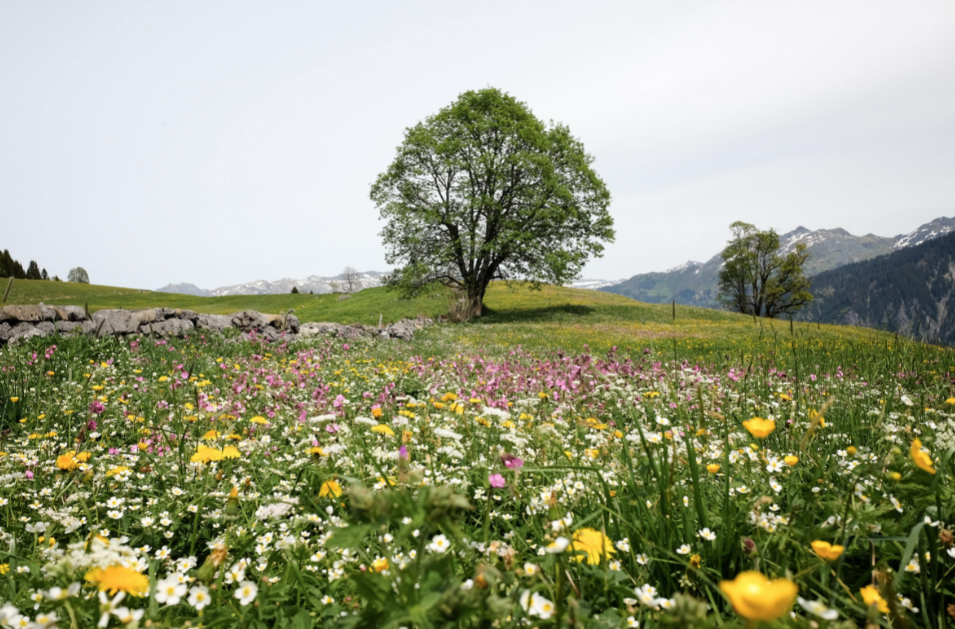
The other day I looked out my home office window and spied a single, pink poppy turning its luminous head toward the sun.

“Where did you come from?” I murmured to myself.

I had forgotten that during a rainy period last December, I pressed poppy seeds into the soft soil in my backyard. It was an act of faith amid a winter made all the more dreary by the pandemic. And it was gratifying to see Mother Nature hadn’t let me down.

Spring is eternal and, yet, we take its life-affirming arrival for granted. It’s easy to miss the changing of the seasonal guards – that subtle period when the effervescence of springtime bubbles up and the plodding gray of winter recedes.

Like the first steps in a celebratory parade, a few timid blossoms appear and then become a celebration of color in the garden. Before long, the sun is shining more often than not, and we’ve traded in our wool socks for flip-flops.

It’s worth paying attention to the start of spring’s procession and reveling in its arrival – full of growth, possibility, and hope.

“Spring will come, and so will happiness,” wrote author Anita Krizan. “Hold on. Life will get warmer.”

While there’s no guarantee the circumstances of our lives will change favorably along with the weather, we can use the momentum of the season to renew ourselves and recharge.

We can look back, without self-recrimination or shame, and reflect on whether we’ve kept the promises we made to ourselves and others in the New Year.

Have we shed our dreaded COVID 15 pounds? Have we quit smoking like we told our kids we would? Maybe we made a quiet vow to be kinder to ourselves and others, but have lapsed quite humanly into irritability. Maybe we just need to pause and forgive ourselves for our failings, acknowledging that some habits, like seeds planted in a backyard, need time to take root.

Whatever intention we set at the start of the year, springtime allows us to renew our commitment, change course or look ahead to where we might now want to go. Spring beckons us to throw open the windows and let in a fresh breeze of perspective. It beckons us to begin again.

Meditation practice gives us an experiential base from which to do so. Every time our mind wanders from our chosen object of focus – the breath, sounds around us, or a softly repeated phrase – we gently reclaim our focus and begin anew.

With the lift of spring in our step, we also can do so in our daily lives and give shape to whatever our hearts may still need or want for the rest of the year. Here are three ways you can use the elevating energy of springtime and your mindfulness practice to renew and recharge:

Lighten Up: Wintertime is serious business. It’s about hunkering down and laying low. But springtime is as playful as a puppy. The comedian Robin Williams once quipped that spring is nature’s way of saying: “Let’s party!” And the warmer weather and brighter days invite us to lighten up – if only for a few moments or an afternoon. We can invite a bit of inner springtime by adopting a more playful or curious attitude toward ourselves, our lives, and even the things that challenge us. Next time you feel heavy-hearted, look out the window for signs of spring and remember that everything is always changing. You might also want to plan a party.

Take it In: Springtime is bursting with a sensory bouquet of sounds, sights, and smells. All of which can fill us with joy and hope. When you head outdoors for a walk, turn it into a mindfulness practice and notice the lilting tune of birdsong, the Crayola box of colors surrounding you, or the fresh scent of your neighbor’s just-cut lawn. As you do so, pay attention to any accompanying feelings or sensations arising within you. The gentle warmth you feel upwelling in your chest, throat, or face might be happiness. And if it is, it’s worth soaking it in like a bluebird sipping water from a fountain.

Begin Again: We can use springtime as a seasonal reference point to start anew with anything we’ve attempted but faltered with or forgotten. There’s a prevailing myth that progress is constant and ascending. In truth, progress happens in fits and starts. Like roots supporting a plant, progress often quietly grows beneath the surface of our lives – it’s evidence emerging with time. Spring gives us yet another opportunity to plant a new seed of intention and patiently wait for what might grow from our renewed efforts.

Filed Under: Uncategorized

Making Well-Being a Practice

June 10, 2021 By kelbarron


Some years ago, a friend of mine found herself in a ditch of depression. In a burst of insight, she wrote down all the things that made her feel good. Leaning back in her chair, staring at the list, she realized she wasn’t taking part in any of them.

Reflecting on what made her feel good – exercising on the treadmill, cooking a healthy dinner, hiking with a friend, or reading a good book – helped my friend create a plan to move forward.

It also made her realize that her happiness was founded on many small things that added up to the big thing of well-being.

In other words, her well-being was a practice of engaging in activities, skills, habits, and routines, which when done consistently, created a desirable outcome.

For many of us, practicing anything is akin to cleaning the kitchen grout with a toothbrush. We want to get to the end but don’t enjoy the journey. As a result, practice gets a bad rap. Images of seven-year-olds playing eardrum-splitting notes on the piano come to mind.

Several years ago, though, it occurred to me that everything worthwhile in life is a practice that doesn’t result in an end but instead is an ongoing process of engagement, struggle, and reward.

Rather than being a dreaded chore, framing things within the context of a practice is a way to live a rich, meaningful life and discover yourself on a deeper level.

“Practice immerses you in your daily self – this body, these moods,” wrote author Glenn Kurtz in his book Practicing: A Musician’s Return to Music. “Practicing is the truth of who you are, today, as you strive to change, to make yourself better, to become someone new.”

Kurtz was writing about musicianship. But we can construe almost any endeavor as a practice.

A good marriage is a practice built upon habits of care, interest, and connection with your spouse. Optimal nutrition is the practice of eating your broccoli and avoiding Twinkies, and learning a few things about the science behind healthy eating. Meditation is something that we can master but are continually in the process of practicing. We can make well-being a practice, too.

Often when we’re down in the dumps, lonely, or out of shape, we have only a dim awareness of how we got there. Certainly not always, but sometimes the states we’d prefer not to be in result from not practicing the behaviors that keep them at bay.

Loneliness, for example, has a way of creeping up on us. But often we become lonely because we haven’t practiced the social skills – talking with friends or neighbors, planning gatherings, or prioritizing time with others – to create a reliable web of social support.

Whenever you find yourself in a psychological, emotional, or physical state you’d prefer not to be in, take stock of what wholesome habits you haven’t practiced and what deleterious ones you have. Maybe like my friend, you can create a list of the activities, skills, etc. that make up your unique brand of well-being.

It also helps to think of practicing anything as a worthwhile endeavor in and of itself rather than a means to an end. Doing so gives you permission to stumble and pick yourself up again, and endure the ups and downs that are part of learning, mastery, and maintaining the skills of whatever it is we’re practicing.

The famed cellist Pablo Casals said that practicing his cello filled him with an awareness of the wonder of life and with the feeling of what an incredible marvel it is to be human. Making a practice of well-being will likely do the same.

On My Mind


Sometimes, pausing and asking ourselves some pointed questions can help us make our well-being a dedicated practice.

Photojournalist Brooke Adams created a handy list of questions to keep herself grounded during the early days of lockdowns and quarantines at the beginning of the COVID-19.

And they still serve as a valuable guide in fostering healthy habits as we begin to see light at the end of what’s been a long pandemic tunnel.

To make a practice of well-being ask yourself the following:

  • What am I grateful for today?
  • Who am I checking in on or connecting with today?
  • What expectations of “normal” am I letting go of today?
  • How am I getting outside today?
  • How am I moving my body today?
  • What beauty am I creating, cultivating, or inviting in today?

Filed Under: Uncategorized

Three Ways Mindfulness Can Make You More Patient

March 17, 2021 By kelbarron

My 21-year-old cat Peter is a testimony to a feline life well lived.

He’s escaped more than a few fights with the neighborhood pride, as well as near misses with screeching car tires. But mostly he’s lived his life in blissful, languid leisure.

In his remarkably old age, though, he’s become cantankerous and as finicky as…well, a cat. He’s also terribly whiny.

When Peter caterwauls at 5 a.m., 6 a.m., or 7 a.m. – I’m still drowsy, so I don’t know what time it is – and demands food, my first reaction isn’t: “Poor, sweet, hungry baby.” It’s: “Shut up!” 

I am, in a word: impatient. It’s not a good look, no matter how early the hour. Impatience is a fire hydrant of reactivity. It’s primes the pump for lashing out at those you love and those you don’t know – the nameless who cut you off in traffic, keep you on hold, or botch your take-out order.

We all know patience is a virtue. But putting it into practice isn’t easy. Even Aristotle said: “Patience is bitter, but its fruit is sweet.”

No matter how difficult it is to do, opening your heart and becoming more patient is exceedingly worthwhile, particularly during an unrelenting pandemic that has stretched our tolerance as thin as paper.

Research shows that patient people tend to experience fewer bouts of depression, negative emotions, and fewer health problems. They also exude empathy and gratitude.

How do we cultivate the ability to wait calmly in the face of frustration or adversity?

Understanding and mindfulness help. Let’s start with a bit of understanding. Some people are born with more patience, just like some of us are born with a talent for languages, music, or athleticism. Most of us know someone who is effortlessly unflappable, and some of us are even lucky enough to live with them.

Patience also is variable. So, don’t be too hard on yourself if you’re foot tapping while waiting in line at the post office. If you’re hungry or haven’t gotten a good night’s sleep, you’ll be far less tolerant of long lines or other people’s foibles.

Yet, we can all learn to become more patient. At least that’s what Baylor University professor Sarah Schnitker found when she studied 71 undergraduate students who went through patience training that involved identifying emotional triggers, learning to regulate emotions, and empathize with others, along with learning to meditate. After the two-week training, study participants reported that they were indeed more patient.

Schnitker also discovered that patience is nuanced and comes in categories such as dealing with life’s significant adversities, small daily hassles, or dealing with other people. We might be patient in one category, but not another.
Either way, mindfulness can help. Through mindfulness, we can become aware of what sparks our impatience. We can learn to work with our frustration and irritability as it arises and respond rather than react to the circumstances in our lives.

We can even learn to become so patient that when our cat wakes us up in the wee hours of the morning, we’re more than happy to hop out of bed and crack open a can of Fancy Feast.

In the meantime, while you’re working on becoming a model of forbearance, here are three ways mindfulness can help:

  • Tune Into Your Body: The body is not only miraculous; it’s highly communicative. It tells you when you’re feeling agitated and upset. And these emotions come with bodily sensations that give you clues that your impatience is outweighing your composure. Whenever that happens, pause, take a breath, and feel your feet on the ground. Allow your body to soften and create more space for impatience to move through you before acting upon it.
  • Somebody Else’s Shoes: Sometimes, being patient is simply a matter of giving someone else the benefit of the doubt and imagining what it might be like to be in their shoes. The person who cuts you off in traffic might be rushing to the emergency room. The person who puts you on hold is likely doing their best. And my poor cat Peter isn’t trying to give me a hard time; he’s just trying to get his need met by meowing (very loudly.)
  • Meditate: Meditation is training in patience. As we sit in silence, attending to the breath or sound or sensations in our body, we learn to be with things as they are. In the process, we become more tolerant of the chatter in our minds, our neighbor’s loud music, or the niggling itch on the ball of our foot. And as luck would have it, the tolerance we cultivate during meditation often shows up as patience in our daily lives.

This blog originally appeared on https://emindful.com/home/


Filed Under: Uncategorized

Parenting in a Pandemic and Beyond

February 2, 2021 By kelbarron

A friend and I recently compared notes on how our teenage daughters were faring during the pandemic – which has thrown kids of all ages a developmental curveball.

If you’re a parent, asking about each other’s children has taken on a heartfelt gravity. During the past year, anxiety about how kids are doing socially, emotionally, physically, and academically has kept parents wide-eyed in bed at night and tired and frazzled during the day.

Collective worry over children’s wellbeing, along with a study of the latest science, prompted the CDC last week to release a new report on the safety of in-person schooling, saying it was O.K. with proper protocols. How education plays out across the country will be a state-by-state, county-by-county, school board-by-school-board conundrum.

Meanwhile, many parents have an ambient sense of helplessness on how best to usher their kids through an extraordinary rough patch.

There is one simple, research-backed measure that all parents can take to improve their children’s emotional wellbeing during the pandemic and well beyond. And it’s this: Give your kids your undivided attention.

Before you groan about another bit of undoable, guilt-producing parenting advice, continue reading.

Decades ago, Stewart Friedman, an organizational psychologist at the Wharton School, and Jeffrey Greenhaus, a business professor at Drexel University, conducted a landmark study on how parents’ careers affected their children’s lives. (The study included 900 professionals from various industries between the ages of 25 and 63.) https://hbr.org/2018/11/how-our-careers-affect-our-children

One of the study’s seminal findings was that the amount of time parents spent working versus on childcare didn’t influence their children’s mental health.

What did? How psychologically available and physically present parents were when they were with their children.

If parents were physically present but mentally consumed by their work or, more commonly nowadays, their iPhones, children were more likely to have mental, emotional, and behavioral issues.

Quoted recently in Inc. magazine, Friedman said: “Time and attention are not the same thing; there’s a big difference between physical presence and psychological presence. You can be spending time with people, but if you’re not psychologically present, you’re not doing anybody any good.”

In other words, quality time isn’t a misnomer. And that’s excellent news not just for fraught parents but for everyone. Being more present for each other during times of duress and even when life hums along is an obtainable behavioral choice that can dramatically improve all of our relationships and serve as a source of enduring support.

Being present is a dedicated mindfulness practice. But everyone – even those who never want to meditate – can put their iPhones in the sock drawer now and then.

We also can tell our kids that after answering emails, getting off our Zoom call, or taking some time for ourselves, we will give them our devoted attention. And whether it’s for 10 minutes or an hour, we will make them feel as if they’re the most important thing in the world.

(Image is courtesy of KateMangoStar)

Filed Under: Uncategorized

The Echo Pandemic

January 22, 2021 By kelbarron

A friend of mine works in a state governmental office. She’s one of the many behind-the-scenes essential workers who is quietly making sure people get the services they need during the pandemic.
 
The other day when I asked her how she was doing, she said she was so exhausted she didn’t know. Many among us are exhausted and burned out. Others are anxious and depressed. So much so that some refer to the multitude of COVID-19-related mental health issues as the “echo pandemic.”
 
That might not be news, especially for those of us who are mentally and emotionally suffering.
 
But what is noteworthy is the national conversation we’re now having about mental health, particularly within the workplace. In a recent WSJ article, chief innovation officers at big tech firms acknowledged how they now include their employees’ emotional health among the things they feel responsible for managing. As Carol Juel, the CIO for Synchrony Financial, told the WSJ: “The new approach for CIOs must be technology plus empathy.”
 
Sometimes from the shadows comes light, and as mental health issues become more of a focal point, there’s hope that conditions that were once stigmatized can be addressed and, more importantly, treated. There’s also something decidedly human about discussing these issues within the workplace, which often is the source of many of our mental and emotional stress. All of it holds the promise of changing mental health care for the better.

The realities of pandemic-related stress, employees demand for care, and more compassionate leadership, will compel companies to offer better access and mental health benefits in the future, according to a McKinsey & Co. report on the coming revolution of mental health in the workplace.
 
Companies also have plenty of financial incentive to do so. According to McKinsey, Starbucks paid more for health insurance for its workers than it did for coffee, and the three domestic automakers spent more on healthcare than on steel. Mental health is a huge driver of overall health care costs. According to the American Institute of Stress, between 75 percent and 90 percent of all physician visits are stress-related.

It’s fair to say most companies and health care plans do a terrible job of caring for their employee’s mental well-being. A visit to a therapist is about five times more likely to be out of network and more expensive than a visit to medical doctor, according to a 2017 report by benefits firm Milliman. And that statistical nugget is just one of many showing how current mental health benefits fall short.

We can all hope, though, that one of the lasting trends of this horrible and unrelenting pandemic is a more caring workplace.

On My Mind


I’m feeling quite newsy so let’s stay on trend. Another outgrowth of the pandemic has been the explosion of telehealth and non-clinical methods for working with conditions such as anxiety and depression.

Nearly 44 percent of Medicare visits happened virtually this past Spring compared to nearly zeor the year prior, according the U.S. Department of Health and Human Services. In the future, it’s just as likely we’ll visit our doctor onscreen as in person.

What’s more mindfulness, which has been moving rapidly into the mainstream, is now viewed as a first-repsonder to these and other issues such as insomnia.

Downloads for meditation apps have soared since the pandemic, governmental agencies such as the state of California list mindfulness as a resource on their COVID-19-related mental health webpages and online mindfulness classes have flourished.

Along those lines, check out my upcoming Unified Mindfulness Class: Improving Life Through Meditation beginning Thursday, Feb. 18th to March 25th from 7 to 8:15 p.m. via Zoom. You can register by clicking on the Classes tab on my website or clicking this link https://www.kellybarron.com/unified-mindfulness/


Filed Under: Uncategorized

  • « Previous Page
  • 1
  • …
  • 3
  • 4
  • 5
  • 6
  • 7
  • …
  • 12
  • Next Page »

Copyright © 2026 Kelly Barron· Site design: Ilsa Brink